Wednesday, October 19, 2016

Carbon dioxide into ethanol fuel


Scientists accidentally turn carbon dioxide into ethanol fuel after reversing combustion process

'Carbon dioxide is a problem right now. If we can use it, then we're preventing it from going into the atmosphere'

Scientists have accidentally discovered a way to reverse the combustion process, turning carbon dioxide back into a fuel.

Researchers at the Oak Ridge National Laboratory in the US used complex nanotechnology techniques to turn the dissolved gas into ethanol.

Because the materials used are relatively cheap, they believe the process could be used in industrial processes, for example to store excess electricity generated by wind and solar power.

The researchers had hoped the technnique would turn carbon dioxide into methanol, but ethanol came out instead.

Dr Adam Rondinone, lead author of a paper about the work published in the journal ChemistrySelect, said: “We’re taking carbon dioxide, a waste product of combustion, and we’re pushing that combustion reaction backwards with very high selectivity to a useful fuel.

"You can use it [ethanol] in the current vehicle fleet, right now, with no modifications.

"Carbon dioxide is a problem right now. If we can use it, then we're preventing it from going into the atmosphere."

The team made a catalyst made from carbon, copper and nitrogen and an electric current was then used to trigger a reaction.

They had expected the process to be much more complicated.

“We discovered somewhat by accident that this material worked,” Dr Rondinone said.

“We were trying to study the first step of a proposed reaction when we realized that the catalyst was doing the entire reaction on its own.

“Ethanol was a surprise. It’s extremely difficult to go straight from carbon dioxide to ethanol with a single catalyst.”

The solution of carbon dioxide dissolved in water was turned into ethanol, with a yield of 63 to 70 per cent.

"That means that of all the carbon dioxide and electricity going into it, you don't waste much of it. The majority of it ends up converted into ethanol," Dr Rondinone said.

The researchers are now working to improve the efficiency of the process and find out more about the catalyst’s properties.

It consists of copper nanoparticles embedded in tiny carbon spikes, described as “lightning rods” that concentrate the electrochemical reaction at their tips, which are just a few atoms thick.

“A process like this would allow you to consume extra electricity when it’s available to make and store as ethanol,” Dr Rondinone said.

“This could help to balance a grid supplied by intermittent renewable sources.”

The work was part funded by the US Department of Energy’s Office of Science.


source: www.independent.co.uk

Monday, June 13, 2016

European Inventor Award 2016


European Inventor Award 2016

On June 9 the prestigious innovation prize, the European Inventor Award, recognised inventors whose creativity and scientific skills are driving progress in Europe.

The awards, which were held in Lisbon this year, were launched by the European Patent Office in 2006 to give inventors the public recognition they deserve and to incentivise future winners.

“Today’s award ceremony is a tribute to the spirit of innovation and the work of dedicated individuals who through their inventions advance the state of the art for all of us,” said EPO President Benoît Battistelli. “The inventions recognised with this year’s award give new hope to people suffering from disease, increase diagnostic efficiency, protect the environment and save thousands of lives on the road. The significance and impact of the work of these inventors underlines the importance of the European patent system for the benefit of economic strength and technological progress in Europe.”

The 2016 winners in the five categories were:

Industry

Bernhard Gleich, Jürgen Weizenecker and team (Germany)


Research

Alim-Louis Benabid (France)


Non-European countries

Robert Langer (USA)


Lifetime achievement

Anton van Zanten (Germany, The Netherlands)


Popular Prize

Helen Lee


The winners were presented with a trophy in the shape of a sail, described by the organisers as a “an enduring symbol of exploration and human ingenuity”.

Any member of the public can nominate a person or team for the European Inventor Award, this year nearly 400 proposals were received. The 15 finalists are then chosen by an independent, international jury who evaluate technological originality and social or economic impact. This year their inventions covered a vast range of fields including electronics, nutrition, medical technology, communications and biochemistry.

The 2016 finalists


source: euronews

Saturday, June 4, 2016

Famous Inventions

Famous Inventions that helped change the world.


Aluminium. 

Alumini
Aluminum


(1880s) Aluminium is one of the most abundant metals. But, it was only in the 1880s that production processes were invented which enabled aluminium to be produced cheaply. Carl Wilhelm Siemens (US) developed a smelter to produce Aluminium from Bauxite ore in 1886. Aluminium is used extensively in building and aeroplane manufacture.

Air plane / aviation

Aviation
First Aero Plane
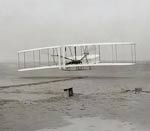
  (1903) The first powered, heavier than air flight was undertaken by Orville Wright on December 17, 1903. The first aeroplane was made of wood. By 1909, they made a demonstration of flight around the Hudson River in New York. Aeroplane technology rapidly improved, and they were used for military means in the First World War.


Antiseptics

Antiseptics

 (1850) Dr Semmelweis a Hungarian physician was the first prominent doctor to make a strong link between the use of antiseptics and improving survival rates from women giving birth. His work was taken up by others, such as Joseph Lister who became a pioneer of antiseptic surgery.


Archimedes Screw


Archimedes Screw
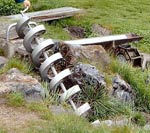
(3rd Century BC). Invented by Archimedes of Syracuse, this innovative design enabled water to be pulled uphill against gravity.

Atomic Bomb

Atomic Bomb


(1939-1945) Between this period a team of scientists developed the first atomic bomb as part of the Manhattan project. Chief of the project was Robert Oppenheimer. Albert Einstein’s letter in 1939 warning that the Nazi’s were developing a bomb, were important in creating impetus for the project.

Ball point pen


Ball Point Pen
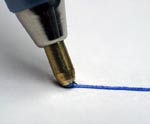
(1938) László Bíró, a Hungarian newspaper editor developed a more suitable ink and ball socket mechanism to prevent ink drying. He filed his first patent in 1938 for a ball point pen in Argentina. After the war, varieties of the ball point pen became commercially successful.

Barbed wire

Barbed Wire


(1867) The first patent for barbed wire was awarded to Lucien B. Smith. Barbed wire became a very cheap way of creating an effective barrier. Initially used in agriculture to keep animals in certain areas. It became widely used for military purposes.

Battery


Battery
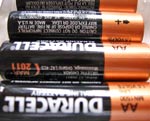
(1800) Voltaic Pile. Alessandro Volta an Italian physicist developed the first battery which gave a steady current using alternative layers of copper and zinc. Lew Urry developed the small alkaline battery in 1949.

Bicycle 


Bicycle
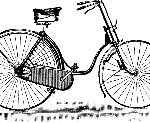
(1839) Kirkpatrick MacMillan, a Scottish blacksmith his said to have developed the first two wheeled pedal powered bicycle. In the 1860s, the Michaux or ‘boneshaker’ improved on this design and started in a boom in bicycle use.

Camera


Camera
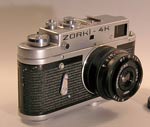
(1839) Louis Daguerre a French innovator spent many years developing the process of photography. In 1839, he made the first camera which enable a permanent photograph to be taken. In 1889, George Eastman invented the flexible role of film which enabled photography to be much more practical.

Computer


Computer
(1940-45) Charles Babbage was considered the father of computers for his work on mechanical computation devices. But, it was only in the 1940s that the first electronic computers were produced. For example, Howard Aiken & Grace Hopper developed the Harvard Mark I computer in 1944.

Cat eyes


Cat Eyey
(1934) Developed by Percy Shaw of Halifax, England. Shaw’s design using a reflective lens embedded in the road enabled motorists to have better visibility when driving during the night.

Clocks 


Clock
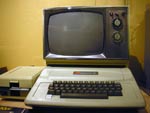
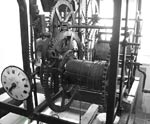
 (1656) Christian Huygens developed the pendulum which made primitive clocks more accurate.

Concrete 


Concrete
(1824) English inventor, Joseph Aspdin developed hydraulic cement, which used a mix of limestone, clay and aggregate.

Electricity

Electricity
(1832) Michael Faraday (England) and Joseph Henry (US) both built models of electricity generators. Nikola Tesla developed the first AC electricity generator in 1892.


source:www.biographyonline.net

Sunday, May 15, 2016

Claude Shannon Father of Information theory

From fire trumpets to supercomputers

Claude Shannon


 Claude Shannon enjoyed building remote controlled model planes and boats. And, his passion paved the way for the advent of the internet, modern computers and cell phones which controls the ways of the world today. Claude Shannon, the Father of Information Theory, an American engineer, mathematician and inventor was born on April 30, 1916. He would have turned 100 on Saturday. As the world remembers him and Google dedicates a Doodle to Shannon on his 100th birth anniversary, here's a glance at Shannon's life that was. Shannon’s father was a businessman, one of New Jersey’s early settlers. His mother was a language school teacher.
A child prodigy, Shannon was keen on studying science and mathematics at school. He graduated from high school in 1932 and enrolled at the University Of Michigan (MIT). By the time he graduated in 1936, he had a master’s degree each in electrical engineering and mathematics. Soon after, he joined the prestigious Massachusetts Institute of Technology (MIT) to continue his studies in the two fields. He later joined the faculty at MIT but quit soon after as he was more interested in maths and science than students and lectures. In 1937, he published a paper as part of his master’s thesis: A Symbolic Analysis of Relay and Switching Circuits. This paper was critically acclaimed and was also published the next year in an electrical engineering magazine. The article was so widely regarded that in 1939, Claude was awarded the Alfred Noble American Institute of American Engineers Award. Howard Gardner even said that the paper was “the most important master’s thesis of the century.” In 1942, he invented signal-flow graphs, after joining Bell Jar labs. This was part of his war time research. He is credited with digital data research, as well as coining the term “bytes” or "bits" for calculating computer data. It was Claude who first visualized a computer made with electrical components instead of motors.
It was at Bell Jar that he met his wife Betty who worked there as a numerical analyst, whom he married in 1949. Google has dedicated a Doodle to Shannon by depicting him as juggling balls in the air. Shannon was famous for cycling around the lab campus while juggling balls at the same time, which is where the idea for the Doodle comes from.
Soon after, though, Shannon took refuge in the basement of his home in Boston where he carried out research work and indulged in hobbies. He invented a host of gadgets such as a flame-throwing trumpet, a device which could solve the Rubik’s Cube, a Roman numeric computer THROBAC and a digital computer called the Minivac 601, among many others. He also designed a box called the ‘Ultimate Machine’, which had a switch on the outside. When the switch was flipped on, a hand from inside the box would emerge and flip the switch back.
Among his other notable inventions was a wearable computer, by which one could beat the odds at a roulette table. His fascination with mathematical theory behind gambling resulted in him making regular trips to Las Vegas, America’s play ground. These trips were accompanied by Shannon’s MIT colleague Edward O Thorp, a mathematician himself, who later published a book called ‘Beat the Dealer’ in 1962. The book was almost a manual on how card counting can help one win over the house at Blackjack. With increasing age, though, Shannon became more of a recluse. He started to publish less and less papers. Rumours, from mental illness to ruining his career by wiling away his time working on frivolous inventions and indulging in fantasies began to do the rounds. He wrote only one paper after 1974.
In 1978, Shannon was diagnosed with Alzheimer’s. His health deteriorated more and more just as technology and data innovations gathered steam and the internet boom was beginning to take place. In 1993, he was admitted to a nursing home. He passed away in 2001, leaving behind a legacy that changed the way the world used technology forever. His contributions to the world of science are indispensable. Shannon revolutionized the way humanity used computers and electrical components in hardware. He is credited with being the facilitator for much of the gadgets and comforts of modern life.


Source :www.thestatesman.com

Wednesday, May 4, 2016

Invention Convention

Young tinkerers show their stuff at Invention Convention 

Matthew Murad, a second-grader from Olmsted School 64, works with his invention called Lightskis at the 14th annual Invention Convention at the Central Library on Sunday. from OFrederick Law Olmstead school works with his invention, Lightskis, during an invention competition at the Buffalo and Erie County Public Library in Buffalo Sunday. second grader at Olmsted School 64 Mark Mulville/Buffalo News

 Old skis and a pair of headlamps for the bindings and 7-year-old Matthew Murad had the ingredients for his entry to the 14th annual Invention Convention and a better way to downhill ski near the woods at night: “Lightskis.”


“That will definitely come in handy for me,” he said standing by his display Sunday afternoon at the Central Library. “Too bad I invented after the snow melted.” The second grader at Olmsted School 64 was surrounded by competitors’ cardboard signs, sketches and protoypes that were windows into other kid dilemmas. Jeans embedded with lights at the hem to better see at night and have hands free to carry wood into the house. Rubber gloves fixed with toothbrush bristles at the fingertips for scrubbing the toilet. A backpack that opened into a jacket. A piano bench that glides for a young player with short arms to move and reach all the keys. Dog bowls on two levels so that a short and a tall dog could eat at the same time. “It’s creativity, communication, collaboration and critical thinking,” said Miriam Kelley, a former Fisher-Price toy design executive, creative studies adjunct professor at SUNY Buffalo State College and board member at the Invention Convention, a nonprofit run by a team of volunteer professionals. “It’s the four C’s of the 21st century.” The competition began earlier this year with an invitation to local students to submit ideas based on materials they found at Goodwill Industries. This year, 82 inventions by 94 students at 11 area schools made it to the Sunday finale at the library. Inventors manned displays and answered questions and proud parents quietly looked on until mid-afternoon, when everyone went downstairs to the auditorium where winners were announced, like Gianna Cicco’s “Toasty Clothes” in the “Home/Garden” category. Together with friend Aryona Nablo, she refinished a small dresser from Goodwill, painted it purple and slipped heating pads in the drawers so clothes could be warm and ready in the winter. “We were cold when we got dressed in the morning and at night when we got out of the shower,” said Gianna, 10, a fifth-grader who wore a headband decorated with a small, askew pink hat. ”I used it once for my pajamas and it felt really good.” Once she put it together, teachers at Colonial Village Elementary School in Sanborn told her they wanted one. She was surprised by how well it turned out. “I didn’t know a 10-year-old could do all this,” she said. For the kids showing off their inventions, creating something cool seemed like a bigger deal than winning. Fifth-graders Annabella Cullinan and Emma Unger beamed as they explained they were inspired by rambunctious younger children in their lives – a brother and neighbor, respectively – when they made the “Toddler Tag Bag.” It was a nylon briefcase with a book about trucks, a tic tac toe game, a lock and a giant toy TV remote. The assortment of $16 worth of Goodwill finds and $5 in store-bought velcro and whiteboard was intended to keep kids entertained so everyone else with them can enjoy dinner at a restaurant. “So parents aren’t frustrated and people around aren’t mad at the kid,” said Emma, 10, who goes to Williamsville’s Nativity of Mary School with Annabella. Emma’s parents stood nearby, impressed by the girl’s diligence and creativity. “I’m like, Oh my gosh, look at her go. She could be in sales one day,” said Christina Unger. Her husband, Jeff, agreed. “They’re excited about it. That was the best part – just getting themselves out there and volunteering for this.” Meesha Henderson was equally impressed by her 5-year-old Maja Laghorne’s interest in making a purse from a shirt at Goodwill, picking out a belt for a strap that matched the gray plaid and fixing a red barrett bow on the pocket for decoration. To help Maja do everything herself, they used iron-on adhesives instead of a sewing machine. “I wanted her to do it all,” said Henderson, who had to keep Maja from wearing the purse until the competition was over. “She has really good taste to be so young.” Maja, who had pink beads in her braids and a shiny “Miss Kitty” purse, was known at home for making sure recyclables, like egg cartons, were rescued from the trash. The kindergartner at School 79 pointed to her favorite part, a pink iron-on skull and crossbones patch she’d picked out at Walmart. She also used parts of the shirt to make a wallet and put in a fabric covered piece of cardboard to make the bottom flat. Now that her purse invention had made it this far, she liked the idea of selling it, suggesting a series of steep prices, $100, $2,000 and $100,000 before her brother leaned over to whisper a more reasonable $12 in her ear. Her mother smiled at the fun she was having being silly. “I let her do her thing,” said Henderson.

source: www.buffalonews.com

Monday, May 2, 2016

Student invention grows hundreds of ‘mini-brains’ at once

Student invention grows hundreds of ‘mini-brains’ at once.

 
Derailing development: A Zika virus infection (right) destroyed the layers (left) of a cultured ‘mini-brain’.


Hongjun Song ignored the first email from Christopher Hadiono, a high school student hoping to spend the summer of 2013 in Song’s lab at Johns Hopkins University in Baltimore. The payoff didn’t seem worth the paperwork, not to mention the hassle of helping the 16-year-old New Yorker find housing for three months. “My thought was, okay, let’s just wait. If he is serious, he’s going to ask me again,” says Song, professor of neurology. Two emails, a letter and a phone call later, Song knew Hadiono was serious. He filled out the paperwork and arranged for Hadiono to stay in the school’s dormitory. He thought the high school student would help with the odd experiment. What happened next was a complete surprise. “I thought I would be working with stem cells and pipettes,” Hadiono says. “I ended up doing something completely different.”


Within weeks, he had mastered computer software for making machine parts using a three-dimensional (3D) printer. By the summer’s end, he had built a device that could grow hundreds of brain organoids, or ‘mini-brains’ — spheres of cells that mimic the layers of neurons in a human brain. Less than four months later, those mini-brains were ready for analysis. “I was shocked,” Song says, recalling the moment he saw the machine whirring on top of a workbench.

Baby bioreactor: 

The machine functions like a miniature bioreactor, a device that delivers nutrients to cells and keeps them at an ideal temperature for growth. The custom-made contraption, which costs roughly $400, can accommodate more than twice as many mini-brains as $2,000 commercially available versions — and its small size and low cost allows researchers to run many of the devices in parallel. The new machine can also expose organoids to about twice as many different experimental conditions — different drugs or small molecules, for example — as are allowed by traditional bioreactors. “We did not think that even a biotechnology graduate student could make this into a reality,” Song says. But unencumbered by the constraints of a doctoral thesis, high school students have the time and energy to innovate, he says. “Once you have a good idea, that changes everything.” So far, Song and his team have used the mini-bioreactors to reveal how the Zika virus tampers with the developing fetal forebrain1. They showed that the virus causes a small head size, known as microcephaly, by killing neural stem cells and thinning brain structures during the second trimester. These findings, along with blueprints for the bioreactor, dubbed SpinΩ, are outlined in a paper published 21 April in Cell1. The team has also filed for a provisional patent. 

Mass production: 

The mass production of mini-brains could be a boon for drug development, enabling the simultaneous testing of different drugs to assess their effects on brain function. “The great advantage to this protocol is that it will allow much more rapid screening and assays to better study neurodevelopment in various neurodevelopmental disorders and to screen for drug targets,” says Erik Ullian, associate professor of ophthalmology and physiology at the University of California, San Francisco, who was not involved in the work.
But some researchers say the new tool needs additional testing before it replaces conventional bioreactors in the lab. “I am very enthusiastic about this approach,” says Flora Vaccarino, professor of neuroscience at Yale University, who was not involved in the study. “Having said that, I would have hoped that they had shown the results in a more rigorous fashion.” It’s been about five years since scientists first created mini-brains. The process involves coaxing cells from a person’s skin or other tissue to form induced pluripotent stem (iPS) cells, and then transforming the stem cells into neurons. Researchers grow the neurons in liquid, where the cells naturally clump together as they grow. The researchers then add growth factors needed for the development of tissue layers in the human forebrain. Mini-brains offer a convenient platform to test new drugs for neurological conditions as well as hypotheses about the origins of autism. But these ‘brains’ are difficult to grow. Researchers have refined mini-brain production using protein-rich gels and various chemical soups that lead to more realistic renditions of the brain. SpinΩ is an attempt to scale up studies of these organoids. One secret of SpinΩ is the tiny amounts of reagents it needs. The device requires just 2 milliliters of nutrient-rich broth in each well of a standard 12-well cell-culture plate — compared with about 120 milliliters in each glass flask of a commercial bioreactor. Small spinning pegs (one in each well) replace the large magnetic stir bar used to stir the broth. Researchers can simultaneously steep as many as 20 balls of brain tissue per well in oxygen and nutrients as they grow and mature.

Major advance:


These devices — the pegs, gears and culture plate — are small enough to stack three high and still fit inside a mini-fridge-sized incubator, enabling close to a thousand mini-brains to grow at once. Only the size of the incubator limits the number of plates that could be stacked, Song says. By contrast, a commercial bioreactor can accommodate up to five glass flasks and can reliably grow a total of 100 mini-brains. The SpinΩ mini-brains grow for about 100 days and survive twice that long, which is similar to cell survival in a conventional bioreactor. Song currently has about 13 mini-bioreactors humming away in his lab, many of them home to iPS cells from people with autism. He plans to use the organoids they produce to uncover how autism-linked mutations affect brain development. Do neurons travel to the wrong brain layers in people with autism? Do the neurons make faulty connections? The student-made machine has piqued the interest of prominent stem cell scientists. Thomas Südhof, professor of molecular and cellular physiology at Stanford University in California, calls it “a major advance.” Another mini-brain maverick, Sergiu Pasca, echoes Südhof’s sentiment. “The elegant work is a really important advance in the field of 3D brain cultures,” says Pasca, assistant professor of psychiatry and behavioral sciences at Stanford University. Despite her enthusiasm for the new contraption, Vaccarino would like to see more data showing how realistic the resulting mini-brains are. By day 54, the spheres emerging from SpinΩ contain regions resembling those found in the prefrontal cortex, a brain region involved in cognition, of a 9-week-old fetus. By day 100, they are similar to a 35-week-old fetus. But Vaccarino does not know whether the cellular layers contain neurons in biologically relevant numbers. She would also like to see stronger evidence that the stem cells differentiate into neurons that communicate using the chemical messenger gamma-aminobutyric acid (GABA), which is implicated in autism.

Outrageous thinking: 

  After a successful summer in Song’s lab, Hadiono went back to high school in New York and is now studying engineering at Case Western Reserve University in Ohio. But Song quickly sought to fill the void with a new batch of teenage talent. High schoolers, he says, offer skills and perspective that can be hard to find among adults. “They know more than we do about programming and 3D printing, all that cool stuff,” he says. “They can make a design in a very different way than how we were trained.” Song now hosts at least three high school students each summer alongside a steady crew of graduate students, postdocs, technicians and young research faculty. He says each group has a different mindset when it comes to innovation. Graduate students and techs are eager to master existing protocols. Postdocs are even more risk averse, feeling pressure to produce and find a job. But high school students are “fearless,” Song says. “Anything they do is a success, so they are more excited. And that’s the reason the innovation comes early on.” Vaccarino sees that kind of youthful “outrageous” thinking in SpinΩ. She points out that high schoolers who sign up for a summer at the bench instead of the beach tend to be smart, enthusiastic and driven. “They get ideas that post-docs and more senior scientists either don’t have or don’t really push through,” she says. Song says he feels sad every time he has to say goodbye to one of these young prodigies. But one high school scientist will be particularly hard to let go: his son Max, now a senior at River Hill High School in Clarksville, Maryland. Max worked with his dad last summer and part-time during this school year, and is an author on the Cell paper. Max will soon be a freshman at Brandeis University in Waltham, Massachusetts, but Song’s daughter Maggie will start high school in a couple of years.